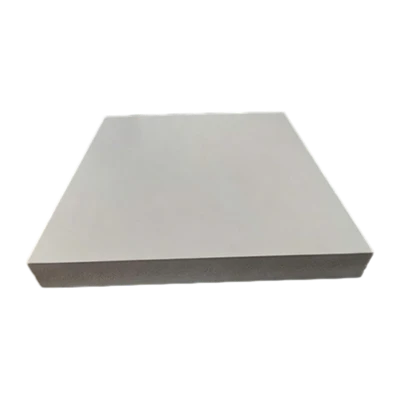
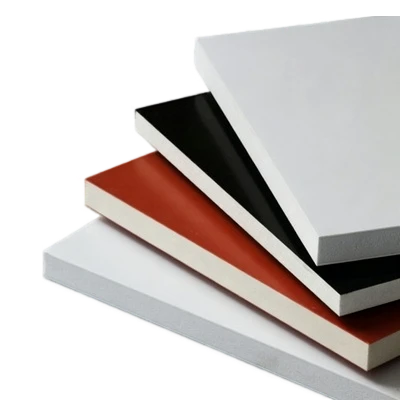
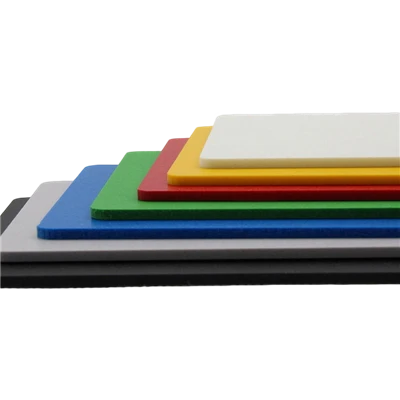
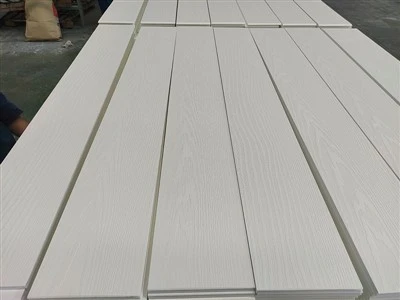
Antimicrobial PVC Board for Veterinary Facility Enclosures is a non-porous, chemical-resistant thermoplastic sheet integrated with inorganic silver-ion technology throughout its core matrix to continuously inhibit bacterial and fungal proliferation in animal care environments.
Technical Specifications
|
Property |
Value / Standard Range |
Test Standard |
|
Thickness |
3.0 mm – 20.0 mm (Tolerance: ±0.15 mm) |
DIN EN ISO 463 |
|
Standard Dimensions |
1220 x 2440 mm, 1560 x 3050 mm |
ISO 1101 |
|
Density Range |
0.45 g/cm³ – 0.70 g/cm³ |
ISO 1183 |
|
Antimicrobial Rate |
≥ 99.9% (E. coli, S. aureus) |
ISO 22196 |
|
Water Absorption |
≤ 0.5% (24-hour immersion) |
ISO 62 |
|
Fire Resistance |
UL94 V-0 / ASTM E84 Class A |
UL94 / ASTM E84 |
|
Surface Hardness |
Shore D 75 – 80 |
ISO 868 |
|
Thermal Expansion |
6.7 × 10⁻⁵ /K |
ASTM D696 |
Material Characteristics & Processing Guidelines
Physical & Chemical Performance
Matrix Dispersion: Active antimicrobial additives are compounded directly into the polymer resin during extrusion, ensuring surface protection remains fully functional after routing, cutting, or scratching.
Closed-Cell Surface: Non-porous outer layer stops animal waste fluids, wash water, and cleaning solutions from penetrating beneath the surface.
Chemical Immunity: Resists structural degradation when cleaned with quaternary ammonium compounds, diluted bleach solutions, and peracetic acid reagents.
Fabrication & Machining Rules
CNC Milling: Operate single-flute carbide tools at spindle speeds between 18,000 and 22,000 RPM with feed rates of 3 to 6 meters per minute.
Thermal Joinery: Join adjacent sheets using hot-air welding techniques at temperatures between 260°C and 280°C with matching welding rod material.
Thermoforming: Heat localized bending zones between 130°C and 150°C to create seamless 90-degree radius corners for trays and wall protection guards.
Application Scenarios
Clinical Recovery & Isolation Kennels
Applied as interior wall panels and space dividers where daily sanitation requires non-absorbent materials capable of withstanding constant fluid contact.
Surgical Prep Room Wall Cladding
Installed directly onto wall structures to prevent impact damage from equipment carts while providing a smooth surface that impedes mold growth.
Fluid Containment & Drainage Trays
Fabricated into seamless rear shields and base pans that route fluid runoff toward drainage channels without trapping residual moisture.
Modular Animal Housing Partitions
Assembled into rigid divider panels for intensive care units to isolate individual spaces without creating open joints where debris collects.
Quality, Packaging & Supply
Inspection & Certification
Each production lot is tested for dimensional accuracy, surface uniformity, and active antimicrobial efficacy according to ISO 22196 standards. Full material test reports and compliance documents accompany every shipment.
Export Packaging
Panels are protected on both faces with protective PE film, stacked on heavy-duty wooden pallets, edge-reinforced, and sealed with stretch wrap alongside desiccant packs for ocean transport.
Samples & Lead Times
Standard sheet samples are prepared within 48 hours. Custom cut-to-size prototypes ship within 7 to 10 business days following technical drawing confirmation. Standard container shipments are fulfilled within 15 to 20 calendar days.
Frequently Asked Questions
Q: How does the antimicrobial action remain effective over long-term use?
A: The active agent is distributed uniformly throughout the full thickness of the material during extrusion. Surface wear, scratching, or continuous high-pressure washing will not remove the protective properties or compromise performance.
Q: Can this material withstand routine contact with harsh veterinary disinfectants?
A: Yes. The chemical formulation resists swelling, cracking, and surface discoloration when exposed to medical-grade disinfectants, alcohol-based solutions, and chlorine solutions.
Q: What are the optimal parameters for cutting clean edges without melting?
A: Clean edge profiles are achieved using single-flute spiral carbide bits on standard CNC routers, running at 18,000 RPM with compressed air cooling directed at the cutting zone.
Q: How are panel seams sealed to maintain a sanitary environment?
A: Panels can be hot-air welded using matching material rods or solvent-bonded to create continuous, sealed surfaces that eliminate gaps where bacteria could accumulate.
Q: What details are required to receive an accurate material quotation?
A: Please provide the required panel thickness, density, sheet dimensions or drawings, color selection, total quantity, and target delivery port.
Hot Tags: antimicrobial pvc board for veterinary facility enclosures, China antimicrobial pvc board for veterinary facility enclosures manufacturers, factory, Anti microbial vinyl foam board, antibacterial architectural PVC board, antibacterial cellular PVC board, antimicrobial PVC foam board for bathroom, sanitary PVC foam board, Silver ion antimicrobial vinyl foam sheet